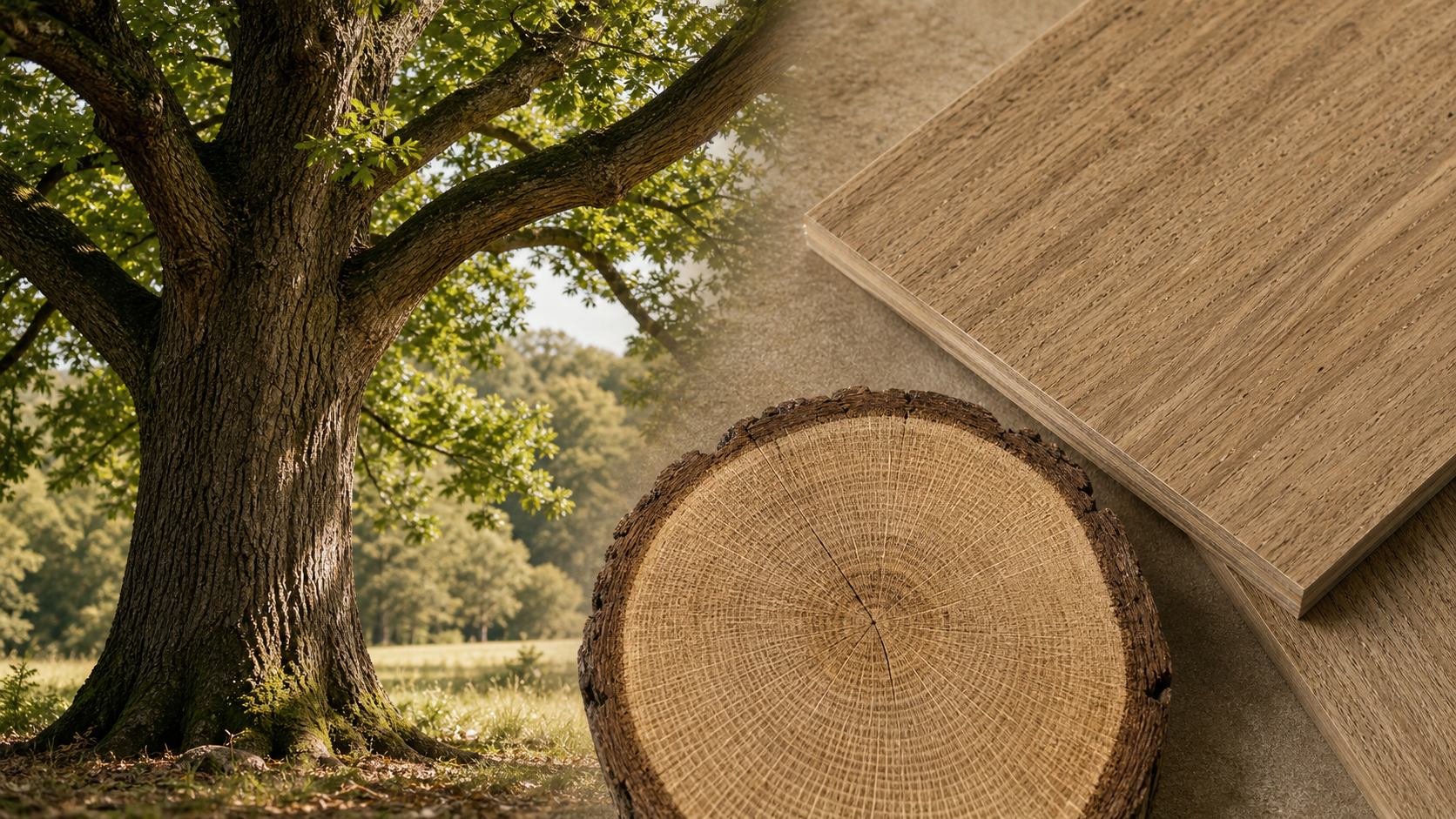
Printed Decor Paper vs Melamine Impregnated Paper
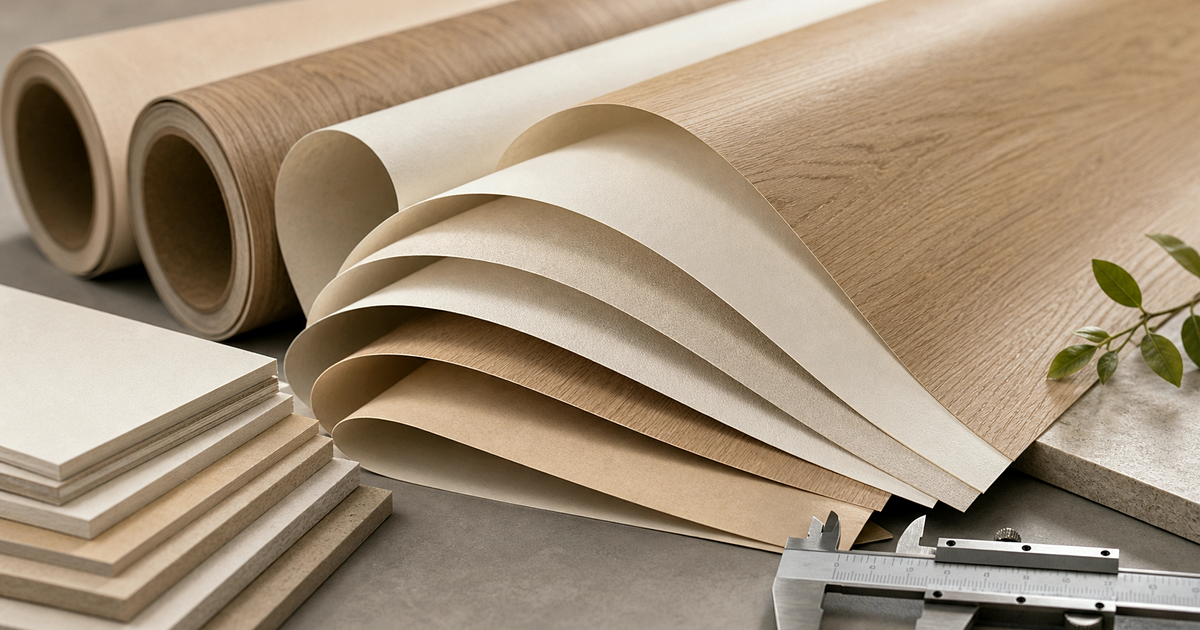
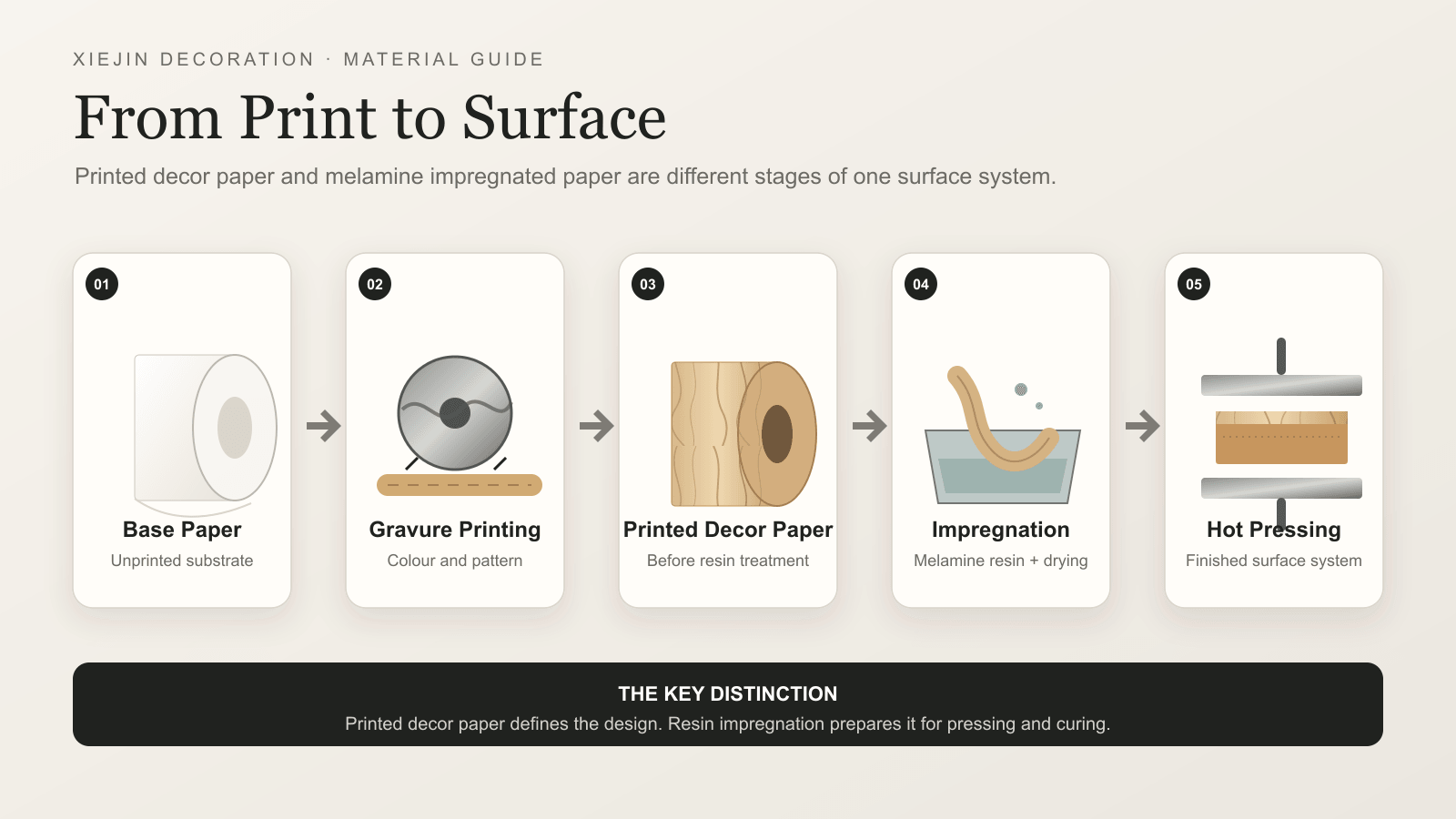
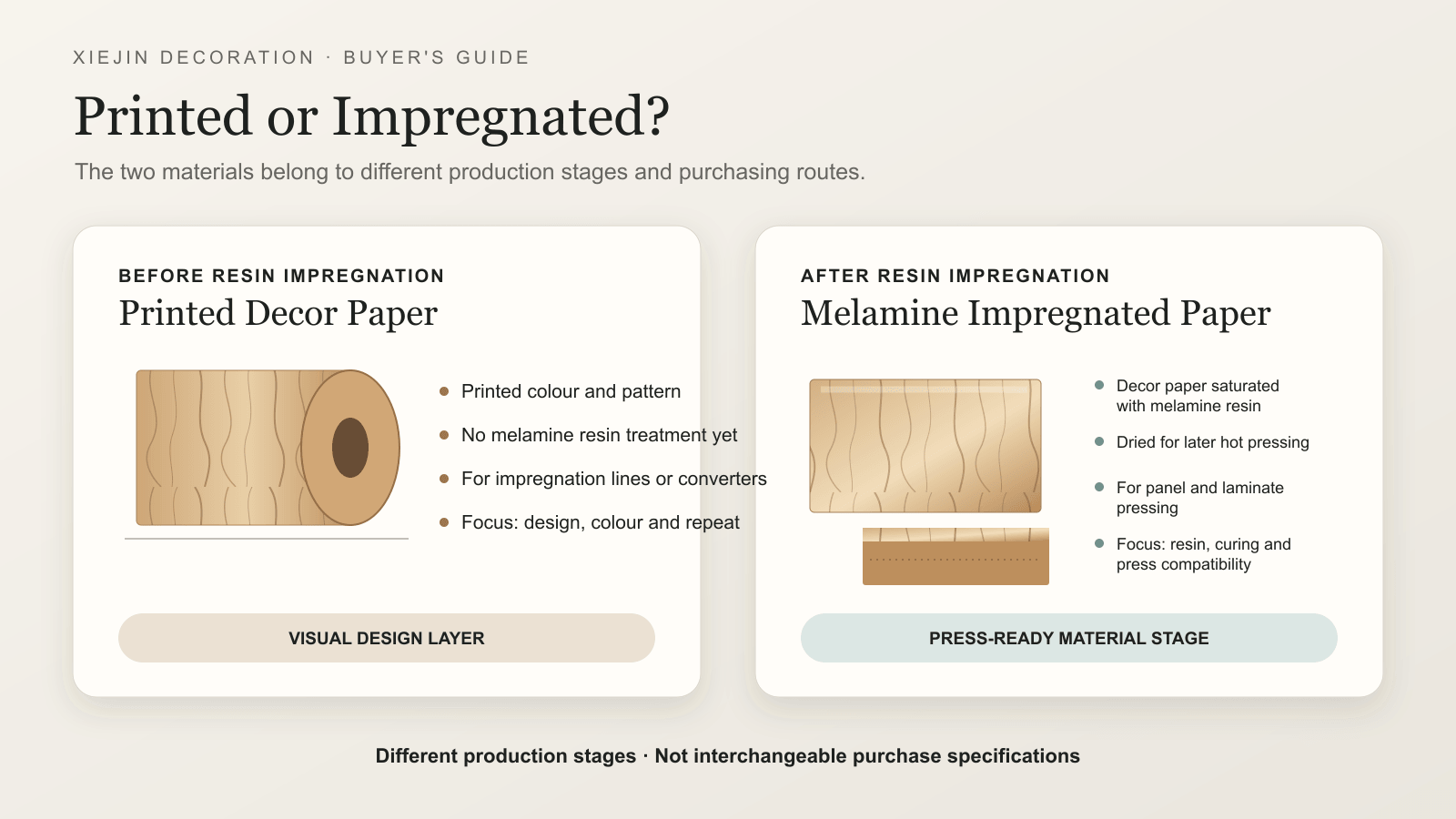
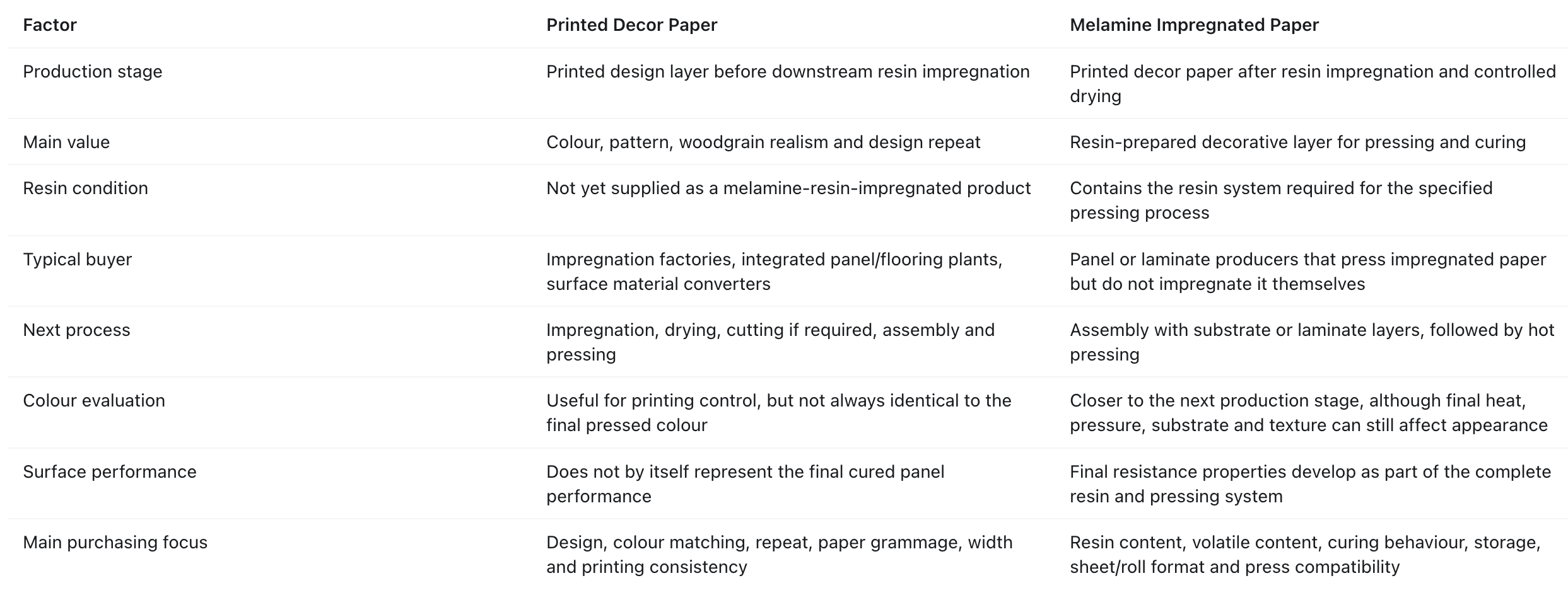
Printed decor paper and melamine impregnated paper are not the same product stage. **Printed decor paper provides the colour and design before resin impregnation. Melamine impregnated paper is printed decor paper that has been saturated with melamine resin and dried for subsequent pressing.**
If your factory has its own impregnation line, you will normally source printed decor paper. If you press decorative surfaces but do not impregnate paper in-house, you may need resin-impregnated paper from an impregnation supplier. Understanding this distinction helps buyers specify the correct material, avoid quotation errors and evaluate colour at the correct stage.
What Is Printed Decor Paper?
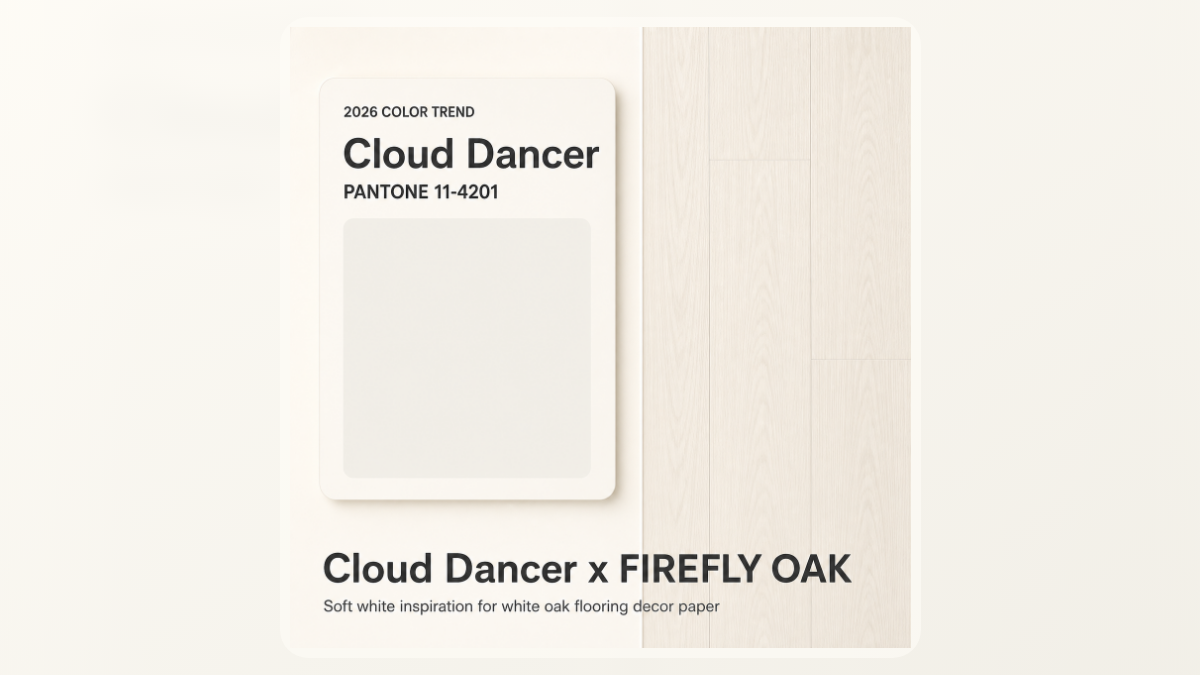
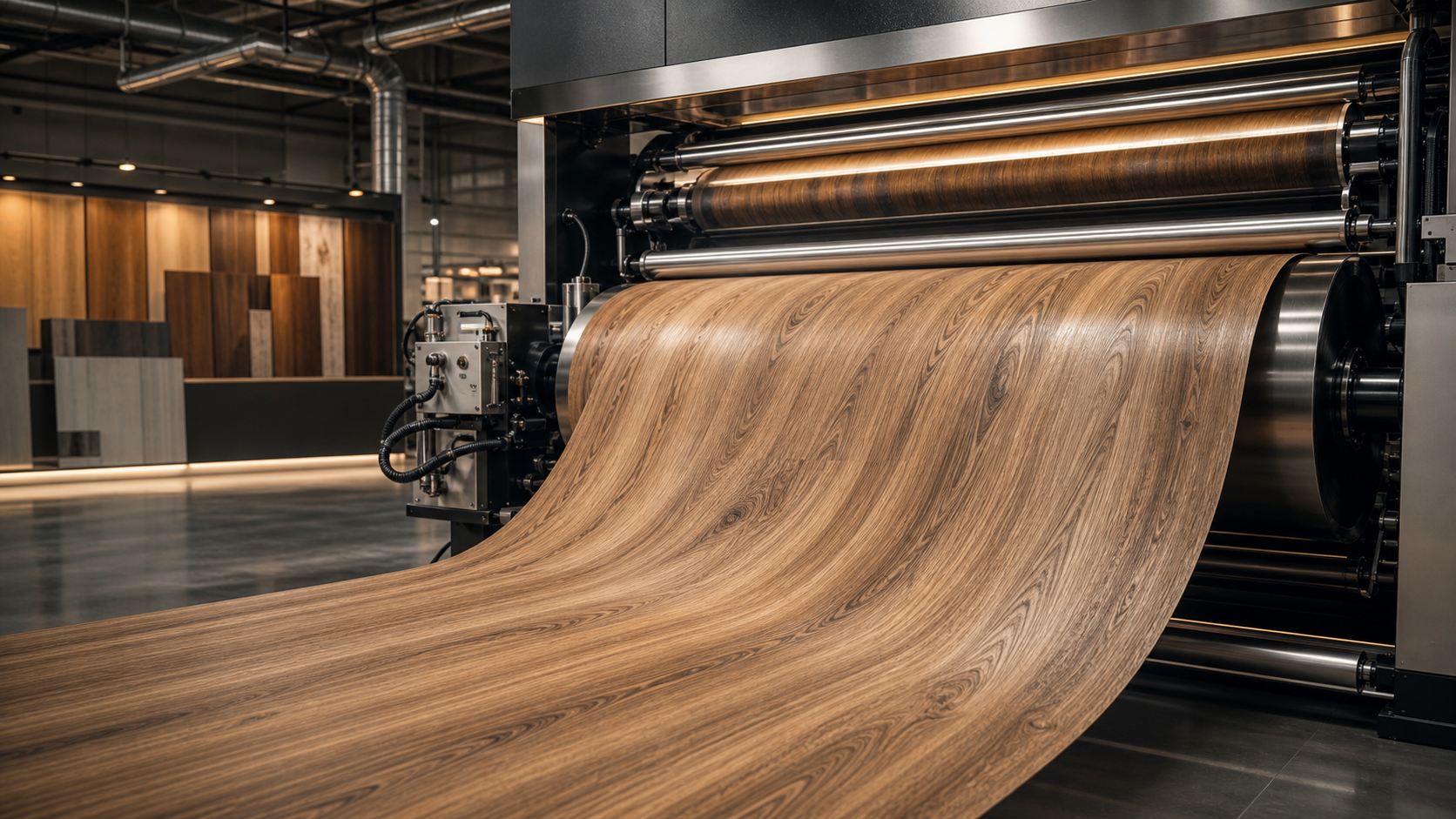
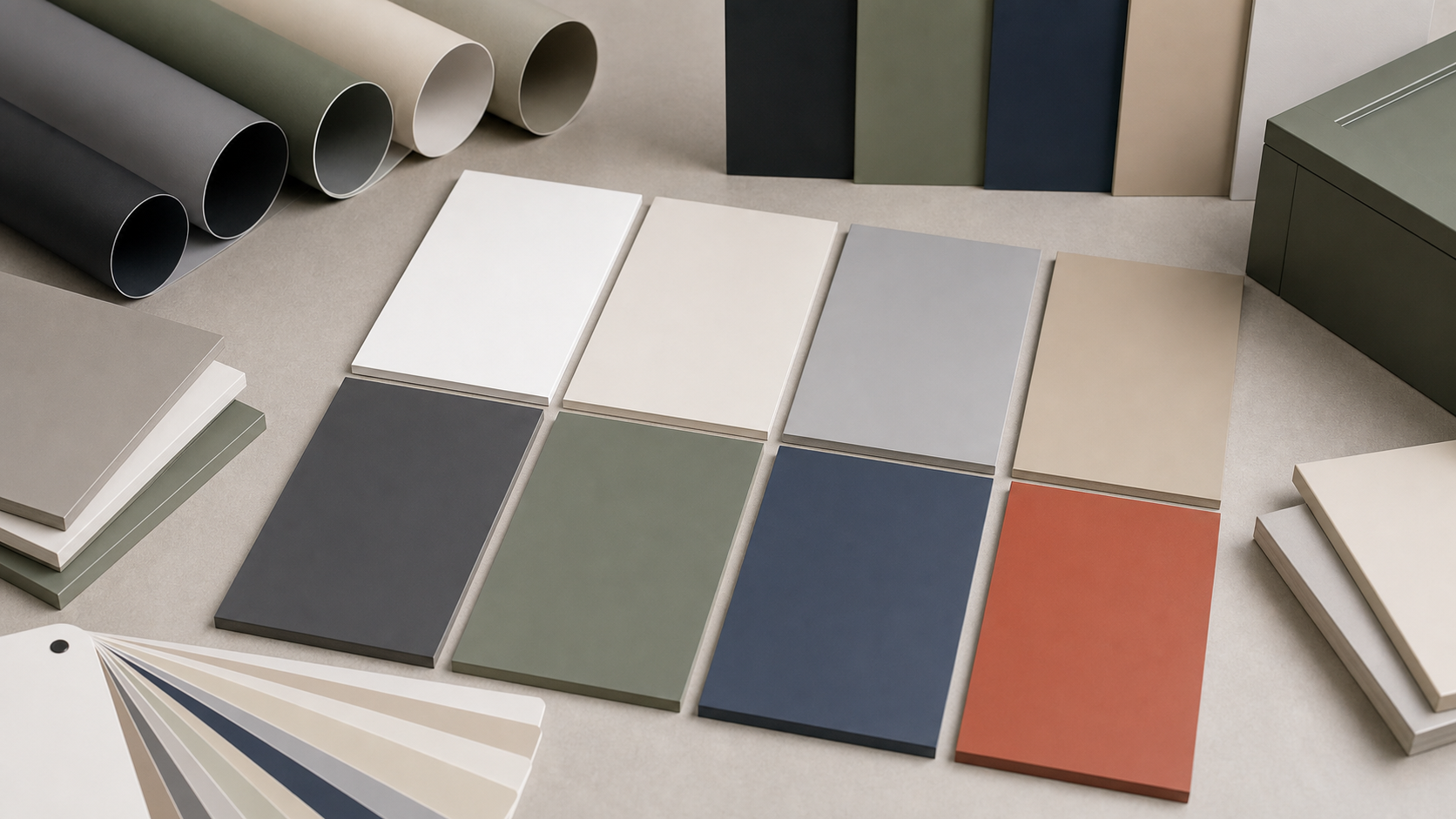
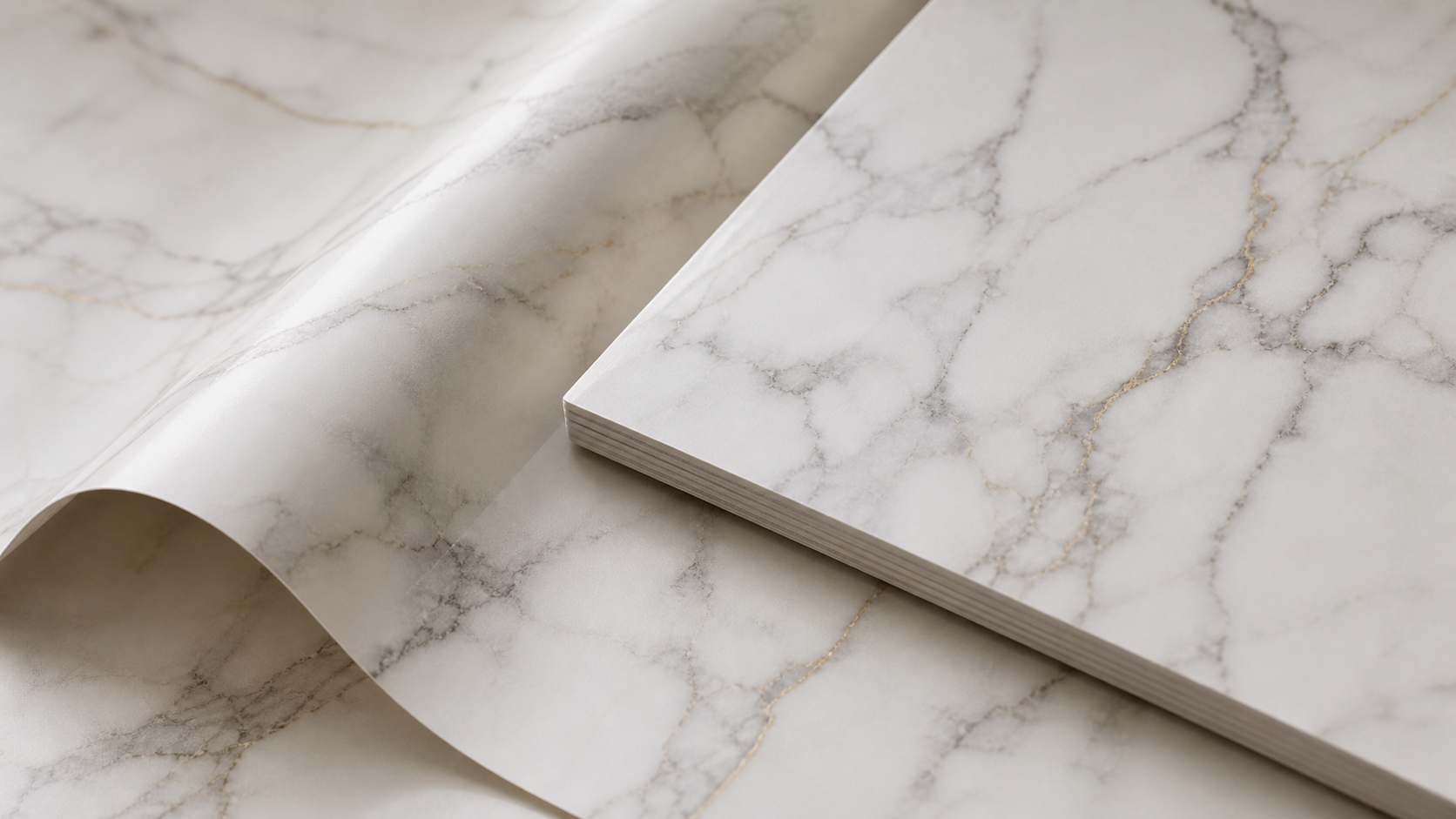
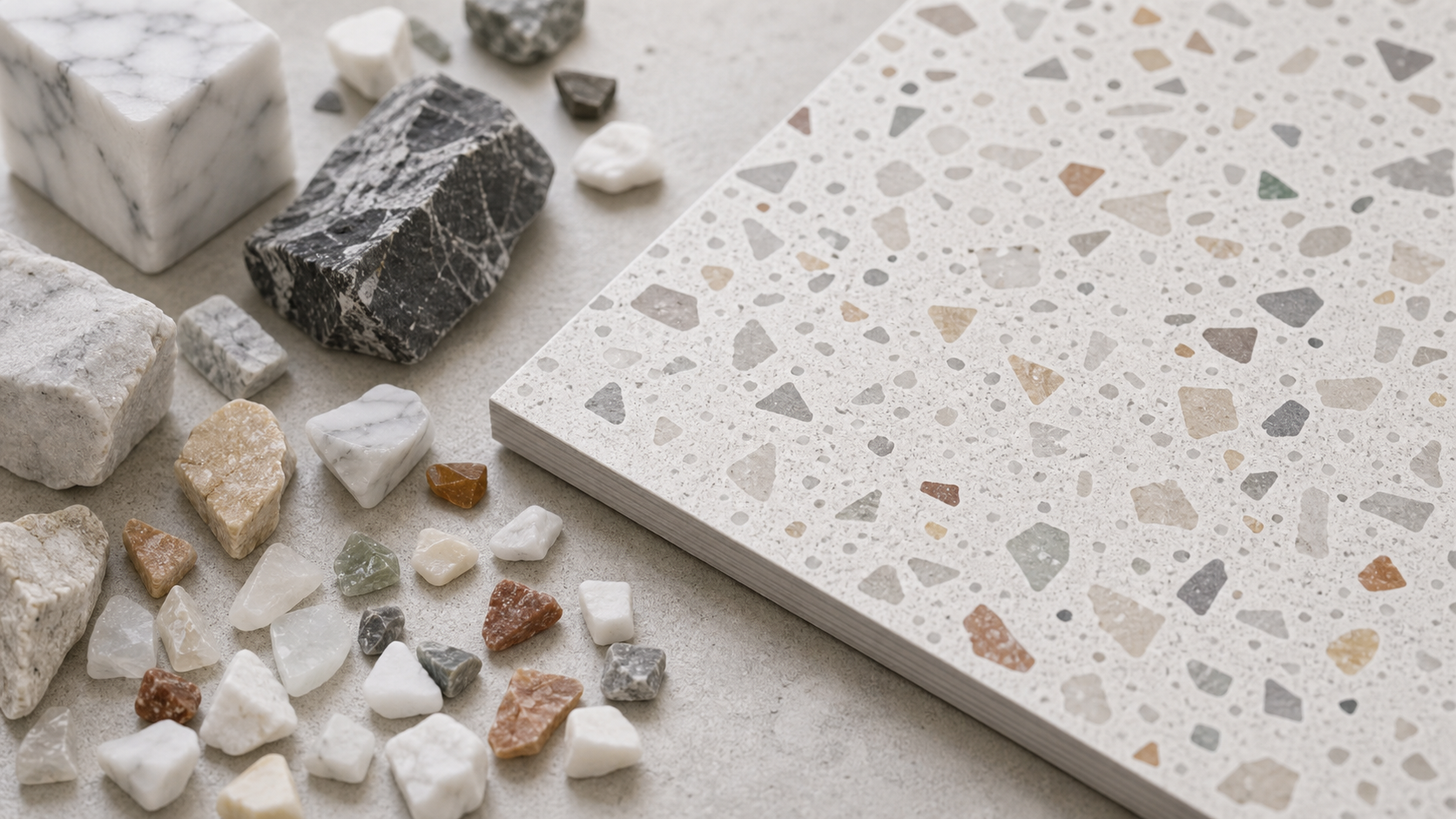
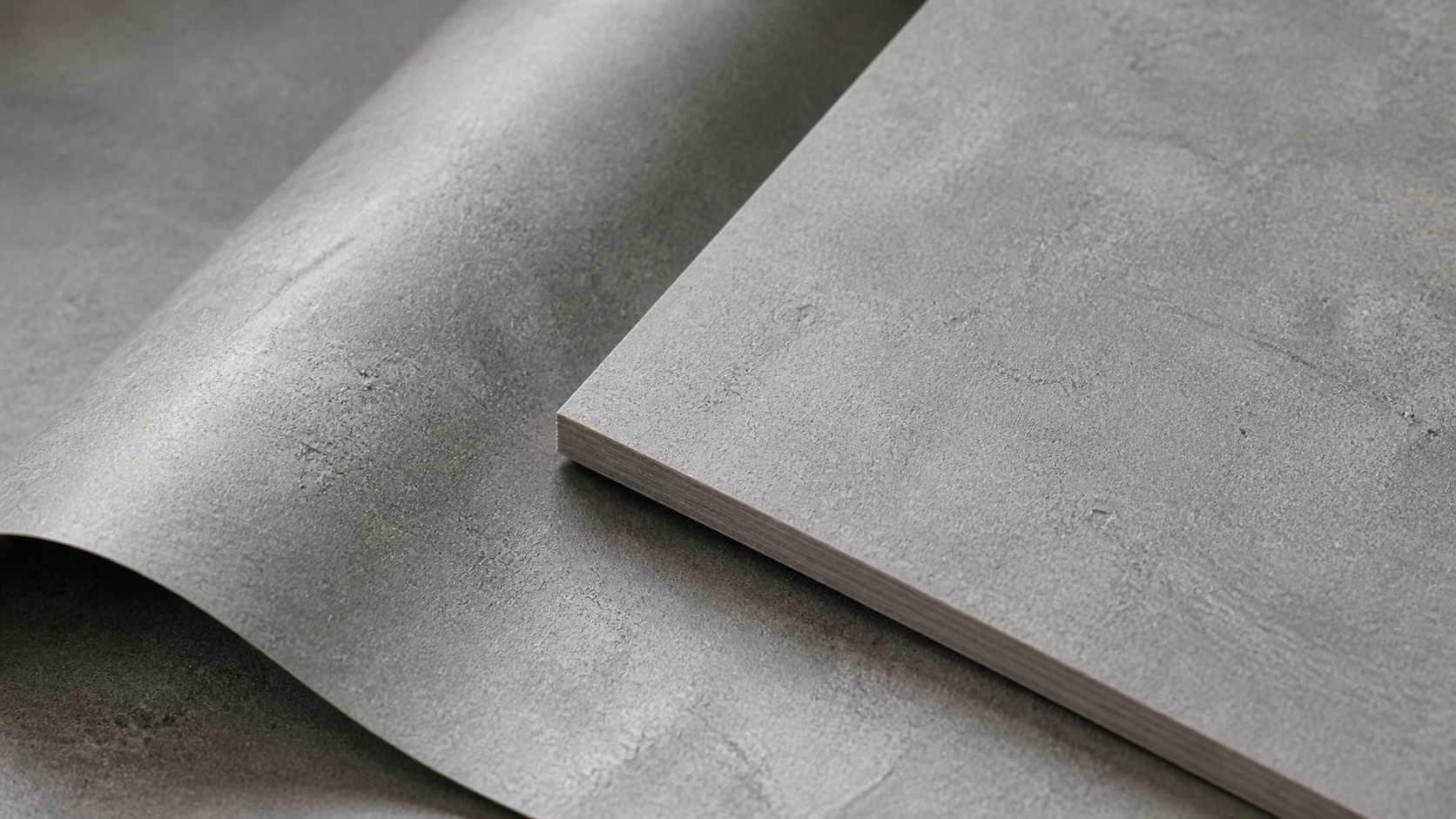
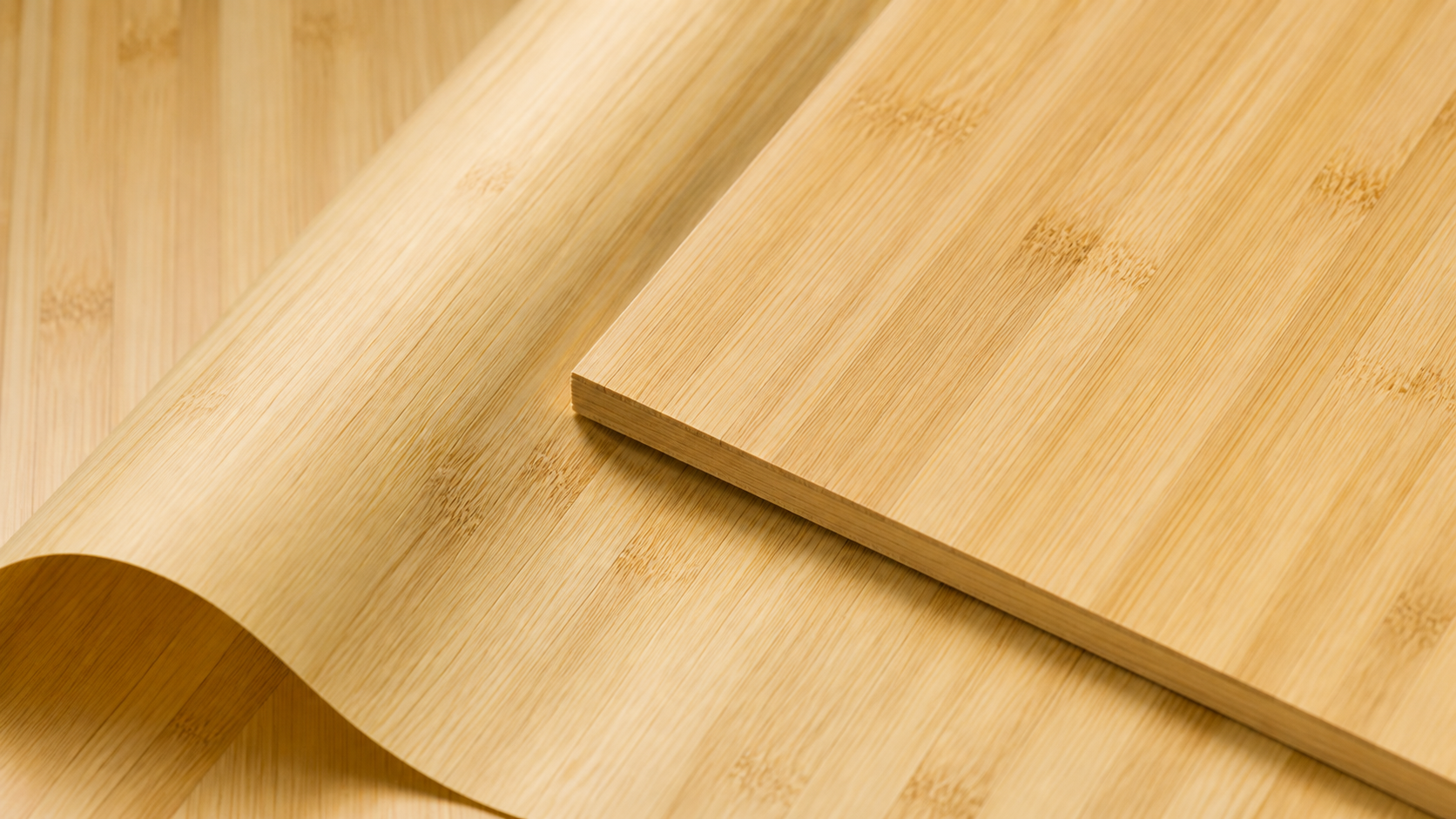
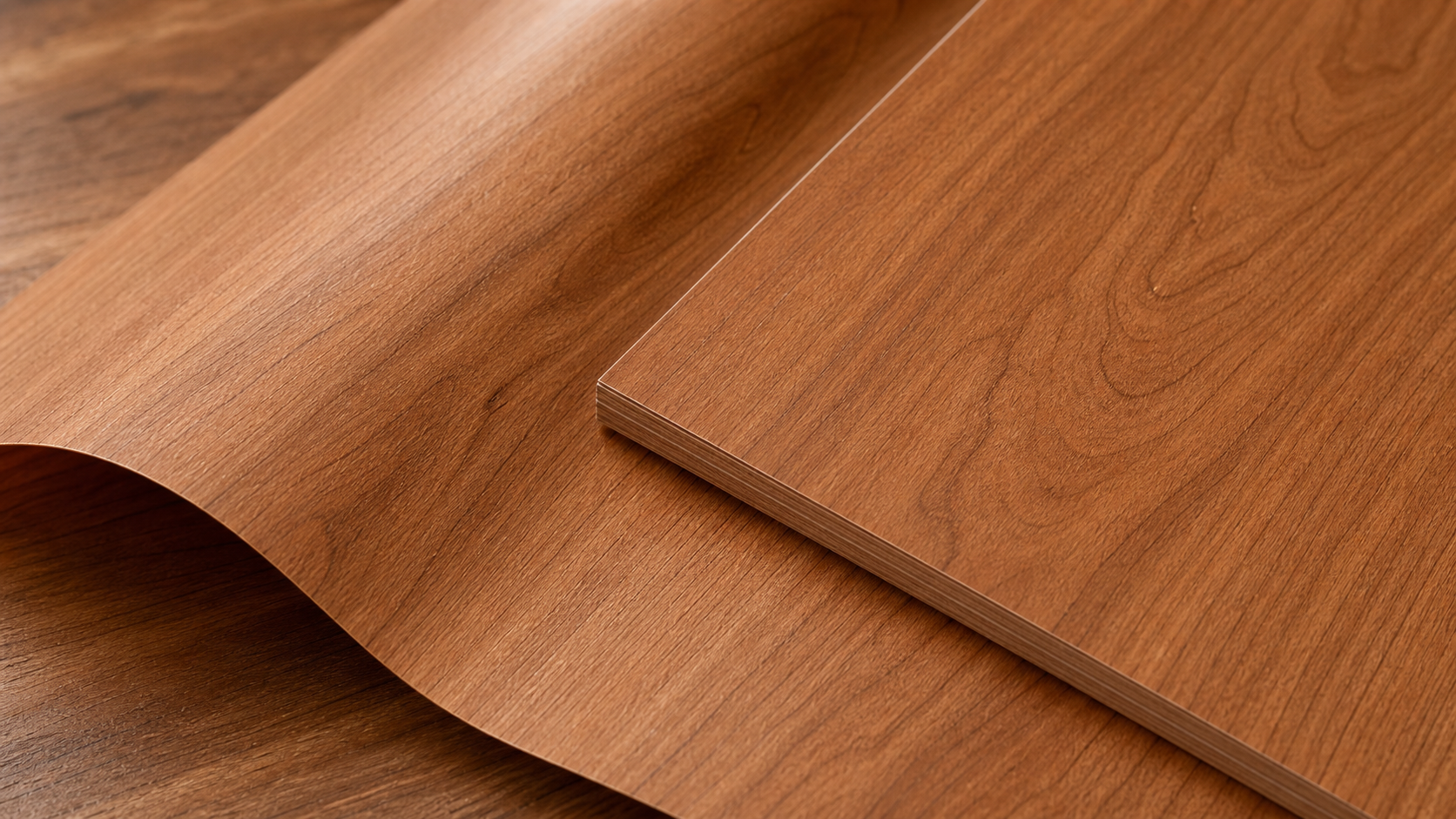
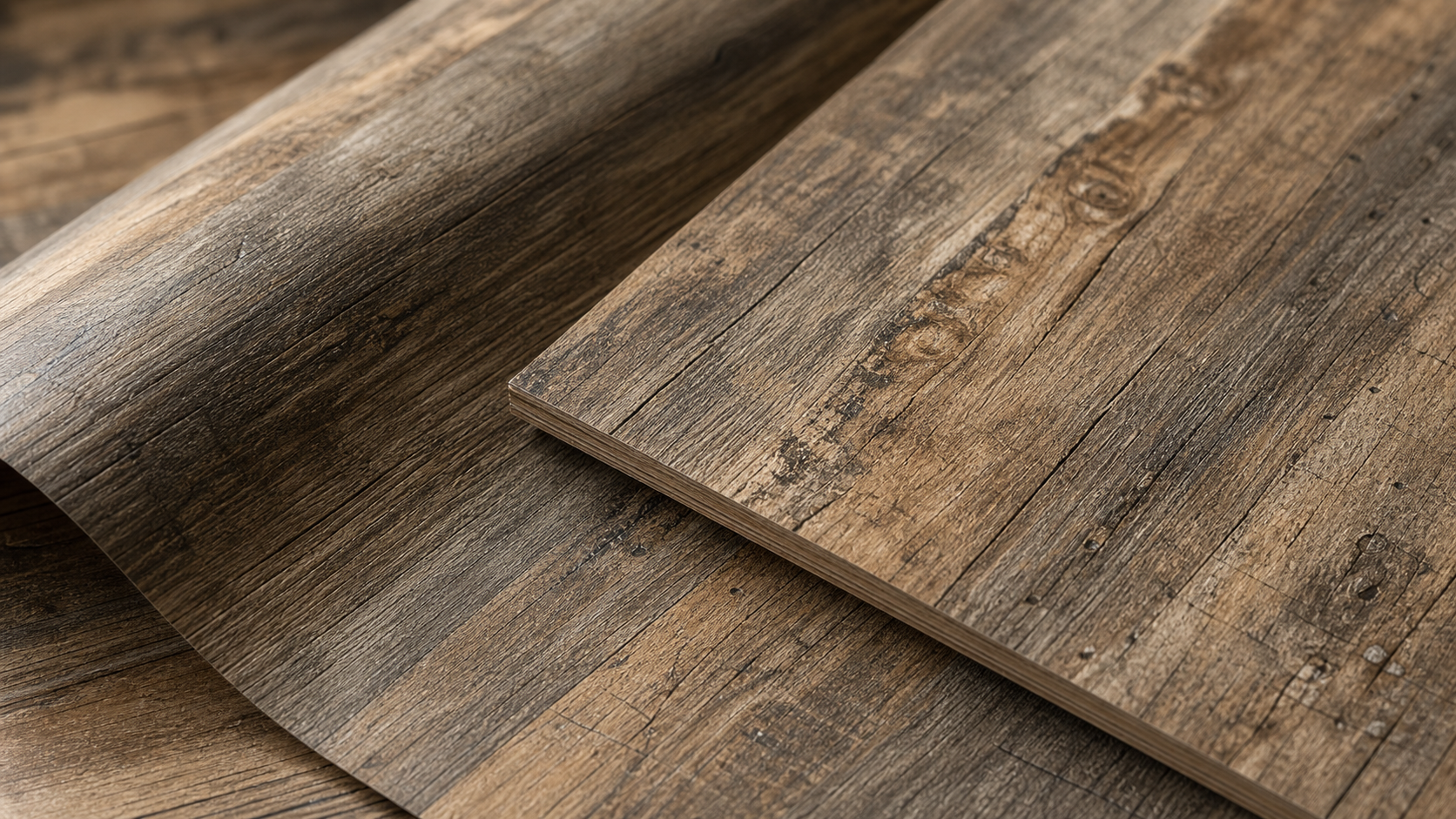
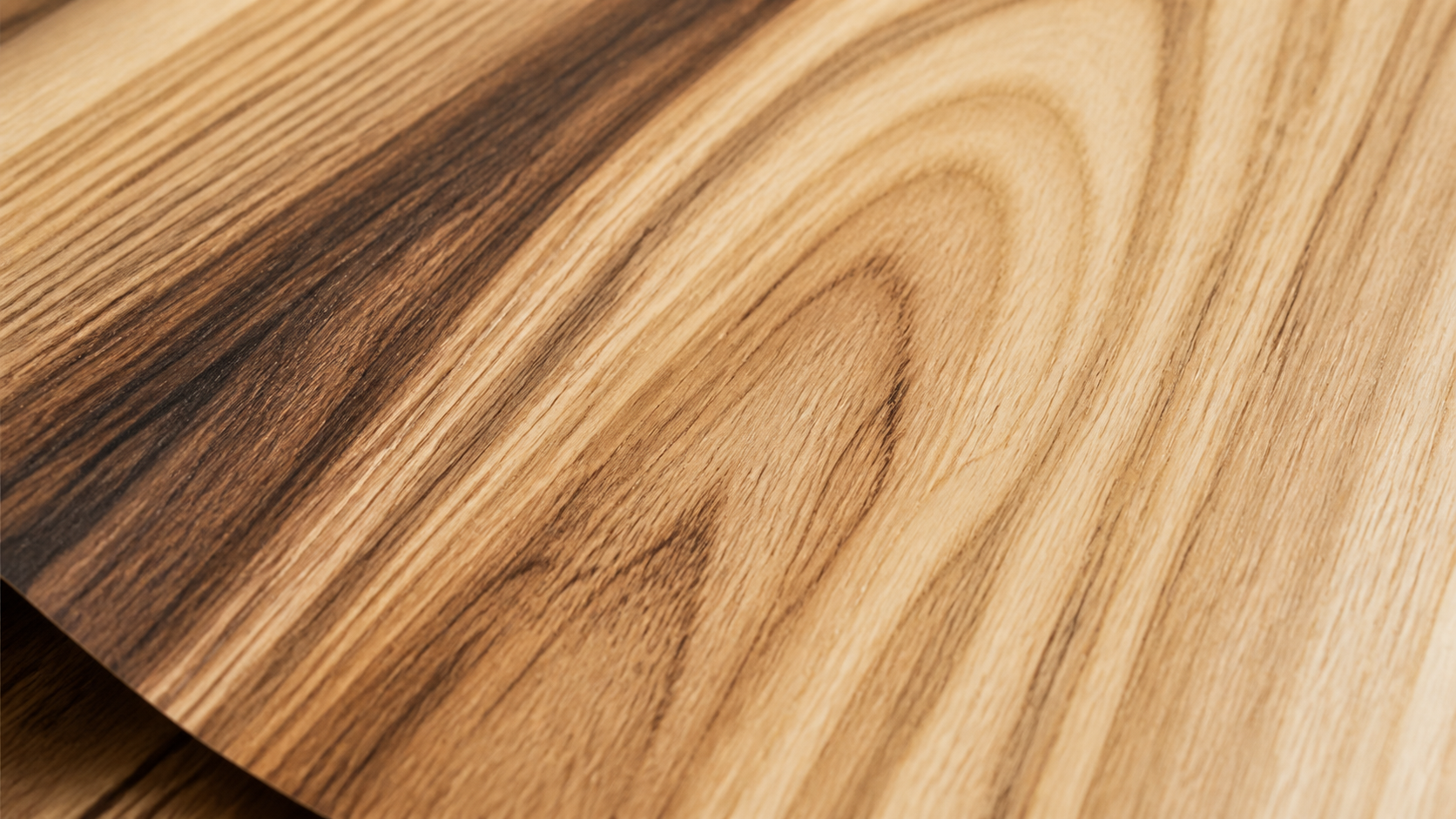
Printed decor paper is a base paper printed with a woodgrain, stone, marble, cement, terrazzo, solid colour or customized design. It creates the visual layer used in laminate flooring, furniture panels, cabinetry, wall panels, HPL and other decorative surfaces.
At this stage, the paper has been printed but has not yet completed the melamine impregnation and hot-pressing process. Its main functions are to provide:
- pattern and grain structure;
- colour and tonal layering;
- design repeat and visual continuity;
- a printable and impregnable surface for downstream processing.
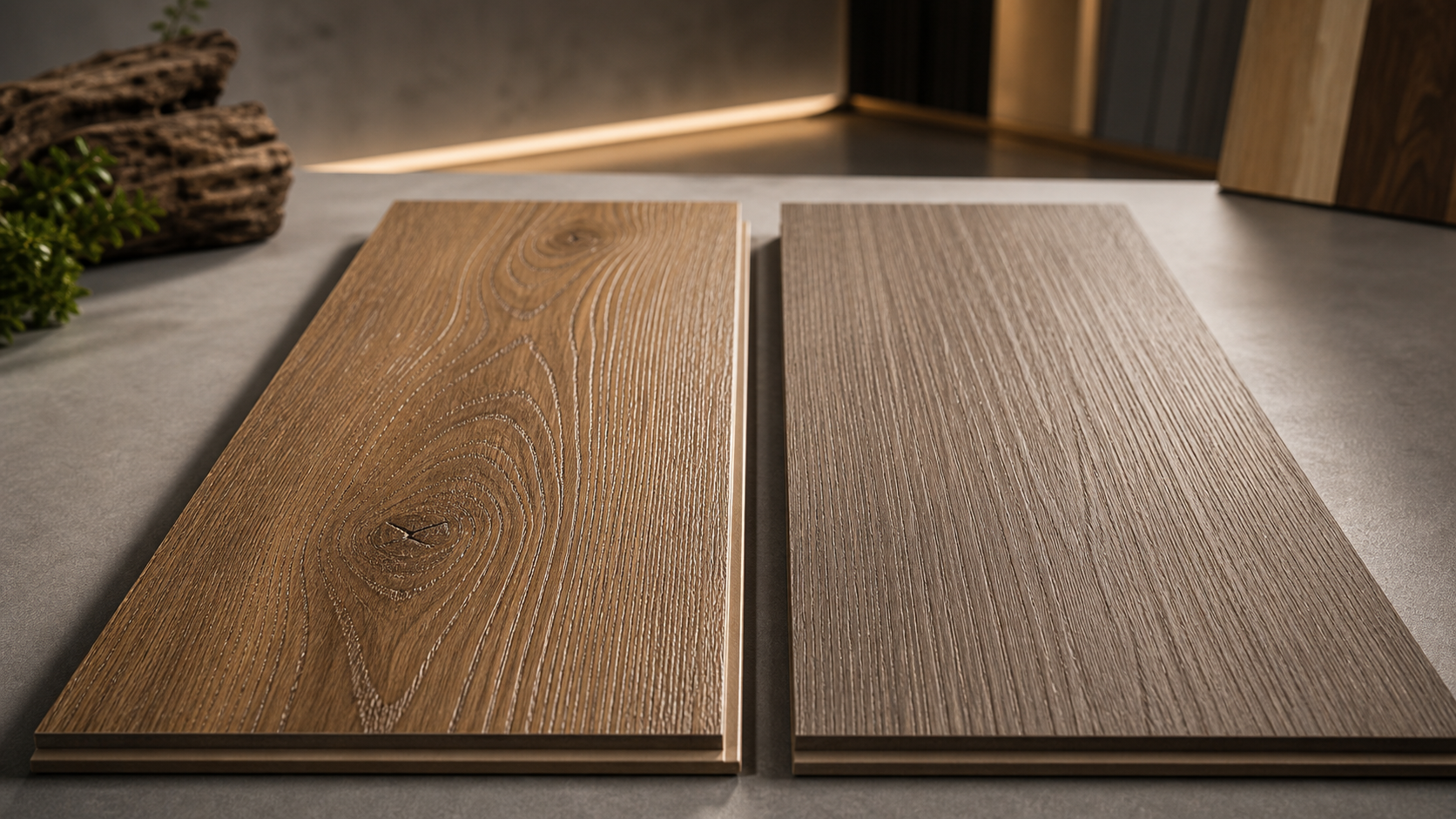
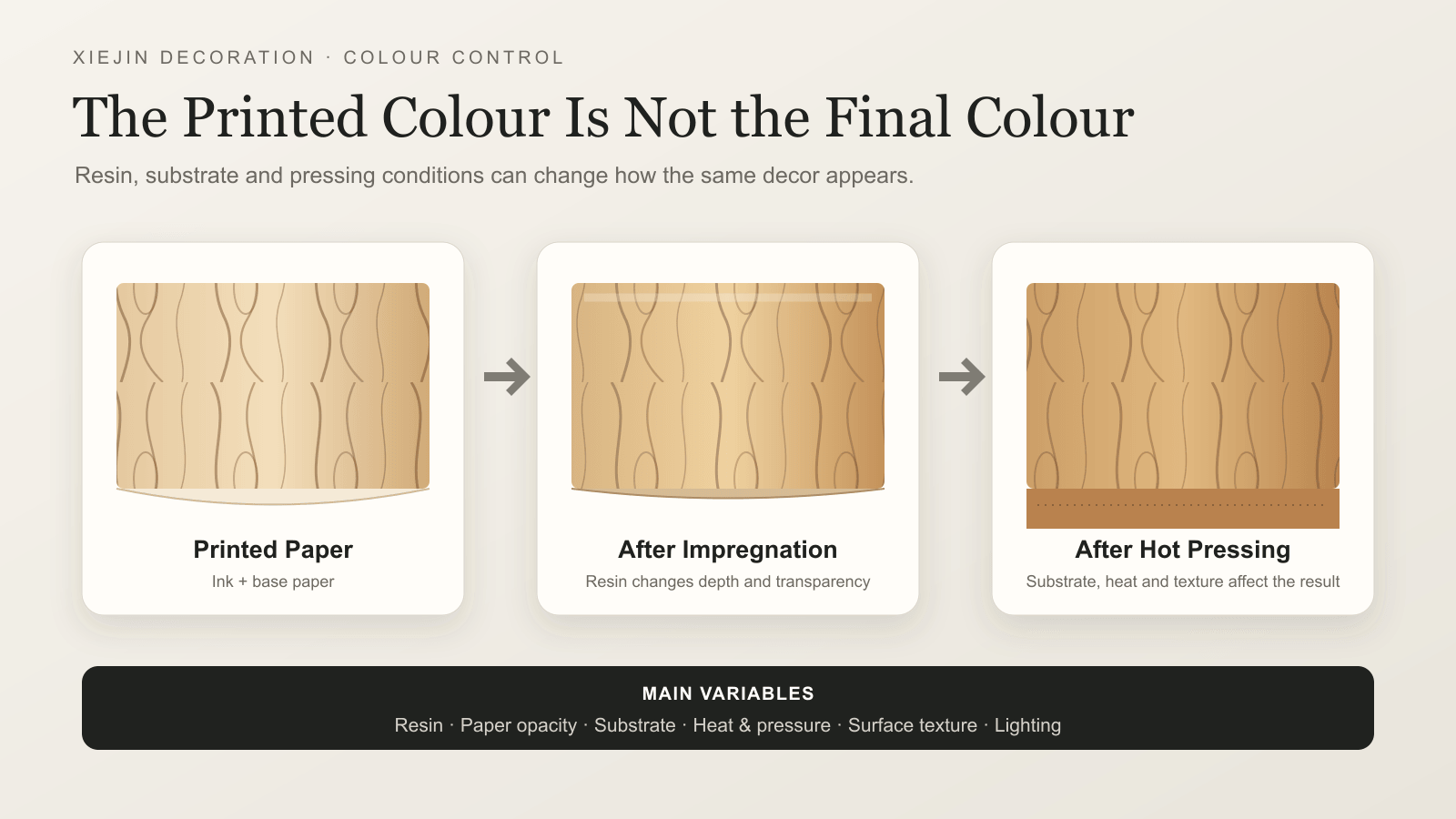
The finished appearance does not depend on printing alone. Base-paper properties, resin formulation, impregnation conditions, substrate colour, press temperature, pressure, overlay and surface texture can all influence the appearance after lamination.
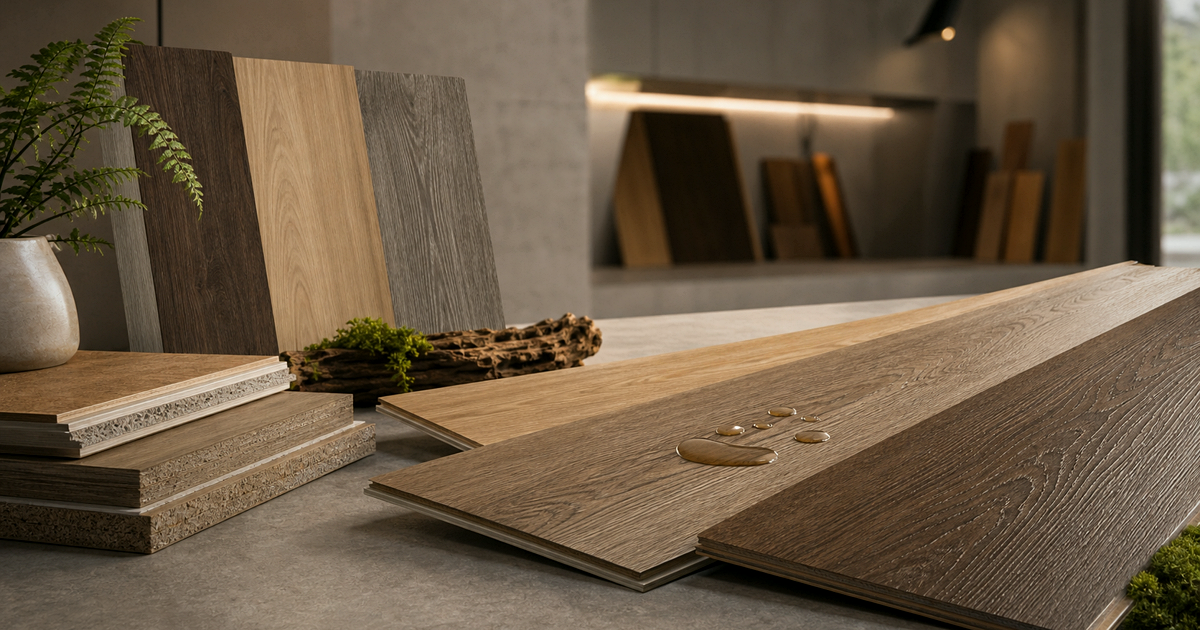
Printed decor paper is widely used to finish wood-based substrates such as particleboard, MDF and HDF, as well as flooring and laminate products. Industry decor printers also describe gravure printing as a common production method for decorative printed paper.[^1][^2]
Explore Xiejin Decoration’s [printed decor paper collections](https://www.xiejindecoration.com/product/).
What Is Melamine Impregnated Paper?
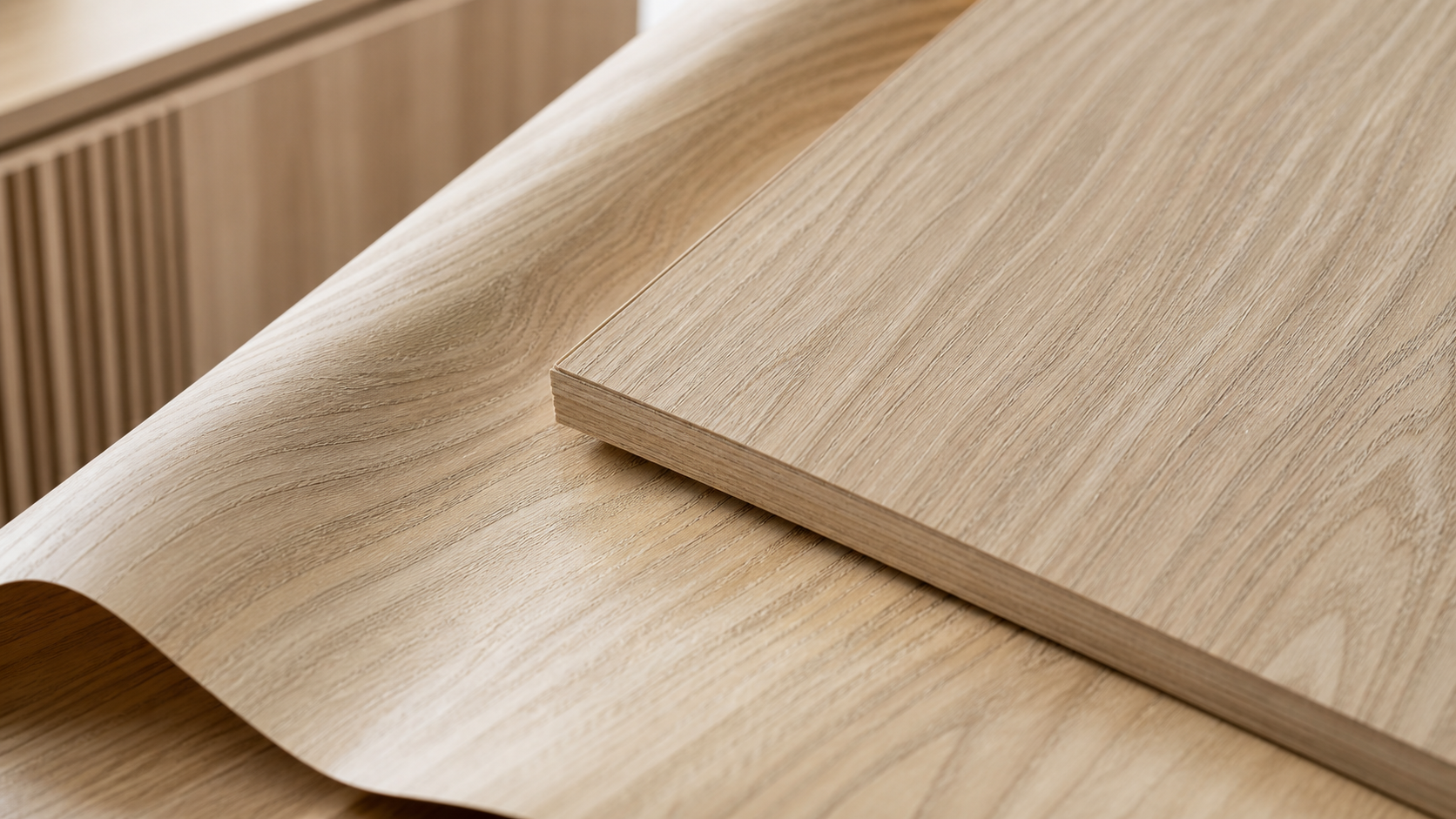
Melamine impregnated paper is produced by passing printed decor paper through a melamine-resin impregnation process and then drying it to a controlled condition for later pressing.
During hot pressing, heat and pressure activate and cure the resin, bonding the decorative layer to a substrate or laminate structure. The cured resin system contributes to the performance of the finished surface, while the printed decor paper provides its colour and design.
Depending on the product system, melamine impregnated decor paper may be used in:
- melamine-faced particleboard or MDF;
- TFL/LPL furniture and interior panels;
- laminate flooring structures;
- HPL, where melamine-treated decorative paper is combined with resin-impregnated kraft layers and pressed into a laminate sheet.[^3]
The exact resin content, drying condition, paper format and pressing parameters must match the customer’s equipment and final application.
Key Differences at a Glance
 Which Product Should You Buy?
Choose printed decor paper when:
- your factory operates its own impregnation line;
- you work with a nominated impregnation partner;
- you need greater freedom to adjust resin treatment for different panels or flooring structures;
- your priority is developing a customized colour, woodgrain or pattern before impregnation.
Choose melamine impregnated paper when:
- your plant has a hot press but does not impregnate decor paper in-house;
- you need material prepared to match a defined pressing system;
- your supplier is responsible for resin formulation, impregnation and drying control.
Choose a finished board or laminate when:
- you do not operate either an impregnation line or a hot press;
- you need ready-to-machine melamine-faced board, HPL sheet or finished laminate flooring rather than paper.
The terms “decor paper,” “melamine paper” and “impregnated paper” are sometimes used loosely in enquiries. A buyer should therefore confirm the required production stage before requesting a quotation.
How the Two Materials Are Used in Different Applications
Laminate flooring
Printed decor paper supplies the woodgrain, stone pattern or colour. It is then impregnated and assembled with the other layers required by the flooring system before pressing. For EIR flooring, the printed pattern and embossing structure must be coordinated so that pores, knots and grain movement align correctly.
Read: [EIR vs Non-Synchronized Embossing in Laminate Flooring]
Furniture panels, MDF, HDF and particleboard
The printed design determines the visible surface, while impregnation and hot pressing integrate it with the board. The substrate colour, resin penetration and press conditions can influence opacity, tone and surface consistency.
HPL
In a conventional HPL structure, decorative surface paper treated with melamine resin is pressed with kraft paper layers treated with phenolic resin. The resulting laminate sheet is then bonded to a supporting substrate. This differs from directly pressing a melamine-treated decorative layer onto a wood-based panel.
Why Can the Colour Change After Impregnation and Lamination?
The colour of a printed paper roll should not be treated as the only approval target. After impregnation and pressing, the final surface may appear lighter, darker, warmer, cooler or more transparent because of:
- the optical effect and formulation of the resin;
- base-paper opacity and grammage;
- resin pickup and drying conditions;
- the colour of the MDF, HDF or particleboard substrate;
- overlay paper or other surface layers;
- press temperature, pressure and cycle;
- gloss, matte or embossed surface texture;
- lighting conditions used during colour assessment.
For this reason, colour development should consider the customer’s final laminated surface wherever possible. An approved printed-paper sample and an approved pressed-panel sample serve different quality-control purposes.
What Information Should a Buyer Provide?
To recommend or develop suitable printed decor paper, the supplier should understand:
1. final application: flooring, furniture panel, HPL, wall panel, cabinetry or another surface;
2. substrate: MDF, HDF, particleboard, plywood or laminate structure;
3. whether the buyer has an impregnation line or uses an external impregnation partner;
4. required paper grammage and base-paper specification;
5. roll width and required delivery format;
6. target repeat length or cylinder circumference;
7. target colour, woodgrain, reference sample or pressed-panel standard;
8. overlay, surface texture and EIR requirements, if applicable;
9. trial quantity and expected production volume;
10. conditions used to approve the final laminated colour.
Providing this information at the beginning reduces repeated sampling and makes colour approval more relevant to mass production.
How Xiejin Decoration Supports Printed Decor Paper Development
Established in 2013, Xiejin Decoration specializes in decorative printing paper designed for downstream impregnation and lamination. We support flooring, furniture, wood-based panel, HPL and interior-surface manufacturers with:
- sample-based colour matching and customized decor development;
- woodgrain and colour design intended to create greater depth after lamination;
- controlled printing for more consistent results across production batches;
- coordination around the customer’s substrate, impregnation and final pressing target;
- a broad decor library covering wood, stone, marble, cement, terrazzo and solid colours.
Our printing range covers cylinder circumferences from **1230mm to 3046mm** and widths up to **1275mm**, giving customers greater flexibility in decor development and longer, more natural pattern repeats.
Read: [Why Large-Repeat Printing Matters for Decor Paper]
Frequently Asked Questions
Is decorative paper the same as melamine paper?
Not necessarily. “Decorative paper” usually refers to the visual paper layer, while “melamine paper” often refers to decorative paper after melamine-resin impregnation. Because market terminology varies, buyers should confirm whether they need printed paper before impregnation or resin-treated paper ready for pressing.
Can printed decor paper be pressed directly onto MDF or particleboard?
In conventional melamine-faced panel production, the decor paper first requires a compatible resin-impregnation and pressing system. Printed paper alone does not provide the cured resin layer needed for direct-fused melamine pressing.
Should colour be approved before or after lamination?
Both stages are useful, but the final pressed sample should be the main visual reference when the end product is a laminated board or floor. Impregnation, substrate colour, temperature, pressure and texture can change the result.
What does Xiejin Decoration supply?
Xiejin Decoration specializes in printed decor paper for downstream impregnation and lamination. We support customized pattern development, sample-based colour matching and production printing for flooring, furniture panels, HPL and other decorative surfaces.
What should be included with a colour-matching request?
Send the target sample or colour reference, final application, substrate, required paper specification, impregnation arrangement, surface texture and final pressed-panel requirement. A physical reference sample is preferable when exact visual matching is required.
Request Relevant Designs or a Colour-Matching Trial
Tell us your final application, substrate, target colour or reference sample, and whether impregnation is completed in-house or by a partner. We can recommend suitable designs or prepare printed decor paper samples for evaluation before mass production.
[View our decor paper collections]